DO-IT-YOURSELF DEVICE FOR MONITORING RADON
Making radiation which can’t be seen/smelt/felt, visible
Radon is a colorless, odorless, radioactive gas that ranks as the second leading cause of lung cancer in the United States, responsible for an estimated 21,000 deaths each year, according to the US EPA. Globally, radon is attributed to roughly 10% to 20% of lung cancer cases. Radon is naturally produced from the radioactive decay of uranium, radium, and thorium in soil, rock, and groundwater. Radon-222 primarily decays by emitting high-energy alpha particles. Its immediate decay products (such as polonium-218 and polonium-214) also release alpha radiation when they break down in the lungs, damaging cell DNA and increasing the risk of lung cancer. If radon level is higher than 4.0 pCi/L, a reduction system should be installed.
A number of devices, both active and passive, are commercially available for monitoring radon. The self-reading electronic active devices use solid-state sensors, ion chambers, or photodiodes to count alpha particles emitted. The passive devices such as activated charcoal canister, alpha track detector and scintillation detectors need to be returned to suppliers to read the concentration of radon. The average cost of active devices is over $100/device and while that of passive devices is ~$40/device.
None of the above are do-it-yourself devices which leave a permanent record. There is a need for an affordable do-it-yourself device for monitoring radon, so a home owner or a service provider can determine the concentration of radon before investing in expensive devices for determining radon levels and an installing radon reduction system.
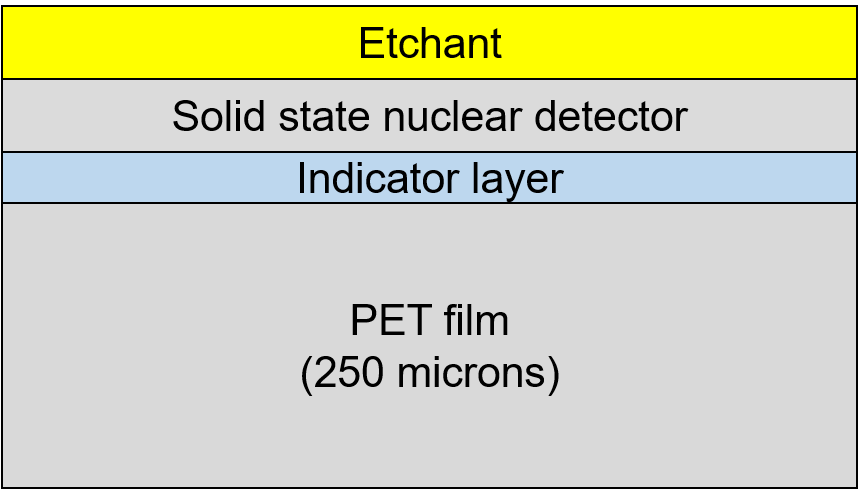
JP Labs’ first patent (US Patent # 4,788,432, November 29, 1988) was on a do-it-yourself device for monitoring radon. It was based on the etching of a solid-state nuclear track detector layer composed of cellulose nitrate and a pH dye layer on a plastic film. The device was developed with an etchant gel, a process similar to old Polaroid® film.
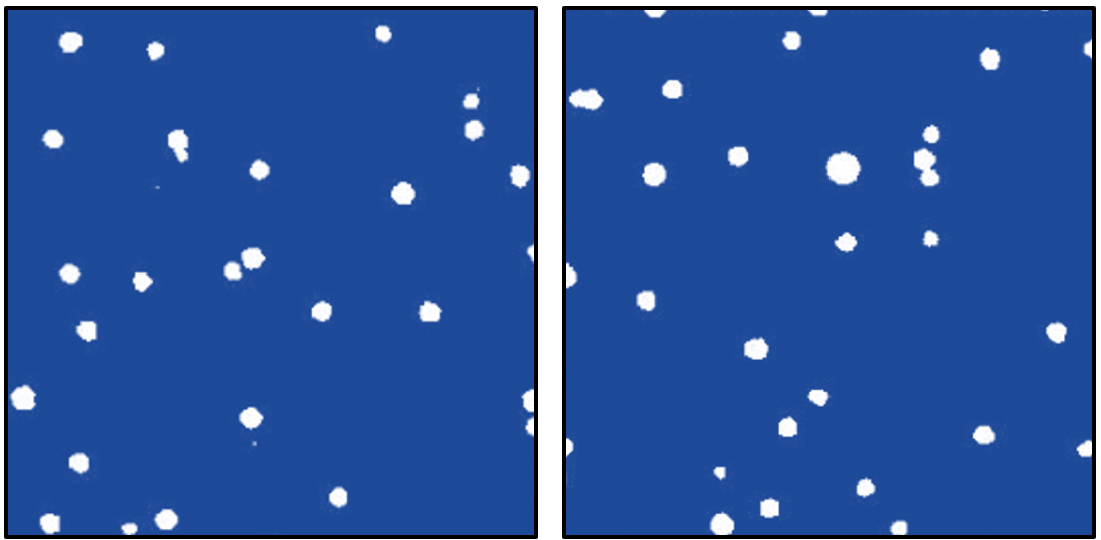
The etchant develops spots visible to the naked eye. The concentration of radon is determined from the number of spots developed per centimeter per day using a calibration chart. In those years, the device was less sensitive and required a month of exposure. Since then, we have replaced the dye layer with a 10 nm aluminum layer (US Patent # 8,343,437) and made the device 50 to 100 times more sensitive by using a radon concentrator layer. The improved device needs to be left in the basement just for a few days.
The global radon detector market is valued at $1.3 billion in 2025 and is projected to grow to $2.5 billion by 2035. About 50% of the market is for passive devices.
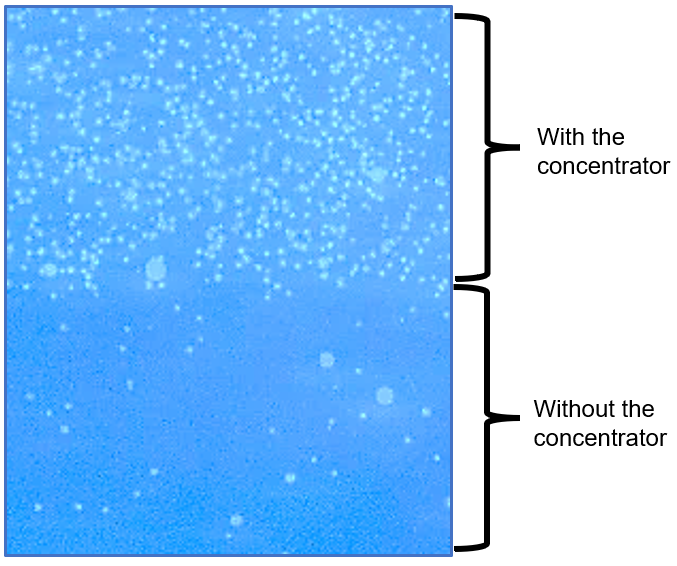
EXAMPLES OF SPOTS AFTER A FEW DAYS